A calmer plan for pet accidents.
Request an estimate →
Look past the surface of the mark.
Pet accidents are not always ordinary spots. Urine, in particular, can travel through the face yarn into the backing and cushion, and odor can linger even when the surface looks improved. A visit that only treats what you can see may leave the source in place. The first job is therefore to understand the extent of the problem, not to jump to a single product.
Work typically starts with a conversation about where accidents have happened, how often, and whether previous treatments have already been used. A close visual look, and in many cases a moisture or odor inspection of the surrounding area, helps map the affected spots. Those findings shape a plan that may include treating the face yarn, addressing the backing or cushion where it is accessible, and discussing limits when damage has already reached a point that cleaning cannot fully resolve.
Padding that is heavily contaminated may need to be considered separately from the carpet itself. In some cases, cleaning the face of the carpet is still worthwhile and odor may improve; in others, replacement of a section of cushion is the more honest recommendation. This page will not promise that every pet odor can be removed, because that is not always true.
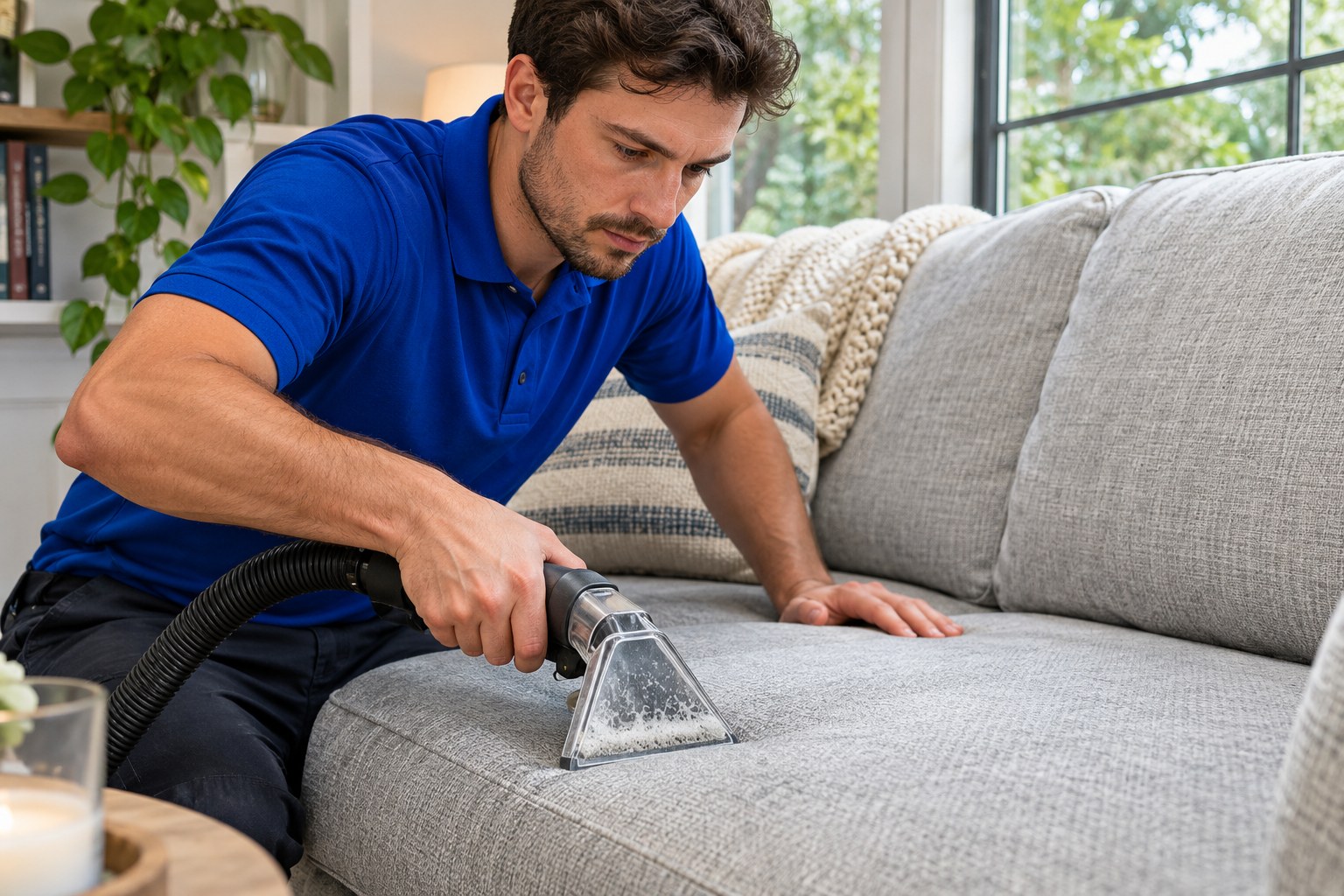
Upholstered furniture and area rugs can have the same issue in their fill or foundation. If the accident is on a sofa, chair or rug, mention that clearly so the plan can include those materials. A general carpet cleaning can be combined with pet-area work when the rest of the room also needs attention.
When you request an estimate, describe the rooms, whether the concern is recent or long-standing, whether odor is still present, and any products already used. Photos of the area help, even if the mark is faint.
Map the area, then treat what can be reached.
Locate the affected areas.
Talk through the history and inspect the carpet, rug or furniture for visible marks, moisture and odor.
Assess the depth.
Consider whether the problem is limited to the surface or may have reached backing, padding or fill.
Treat and review the limits.
Clean what can reasonably be cleaned, and be clear about what may remain or what replacement might need to be considered.
Fresh accidents are generally easier to address than older ones that have been through several home treatments. Avoid over-wetting the area while you wait, and avoid covering a damp spot with a rug or plastic, which can trap moisture. Share what you have already applied so residues can be taken into account.
When a room still tells you a pet was here.
A faint yellow or brown mark that returns, a stiff patch in the pile, or an odor that is stronger on humid days are common reasons to ask for this service. You may also notice that one corner of a room, a favorite resting spot, or the edge of a doorway is the consistent problem area.
If you are also preparing a home for a move, or if you want the rest of the carpet cleaned at the same time, those services can be requested together. If the issue is a single household spill rather than a pet accident, the spot and odor care page is the better starting point.
Pets are part of many homes. The goal of this service is a clearer, fresher space and an honest plan, not a guarantee that every odor or discoloration will disappear.
Request pet-area care →
Good to know.
Can every pet odor be removed?
No. Urine and other accidents can reach backing, padding or fill, and some odors remain after surface cleaning. An assessment of the extent comes first.
Do you treat furniture and rugs as well?
Yes, when those are the affected items. Mention sofas, chairs or rugs in your request so the plan can include the right materials.
Should I keep treating the area at home?
Avoid adding more product or more water once you have decided to request help. Note what you already used so residues can be considered.
Is this the same as a regular carpet cleaning?
It can be combined with a general cleaning, but pet-area work is more targeted and may involve a closer look at padding or fill. Request both if the rest of the room also needs care.
What should I include in my estimate request?
The rooms or pieces involved, whether the issue is recent or long-standing, whether odor is present, and any products already used. Photos help even when the mark is faint.
Other ways we can help.
These services often go together. Choose the ones that fit your space.