
Your favorite seat deserves a fresh start.
Request an estimate →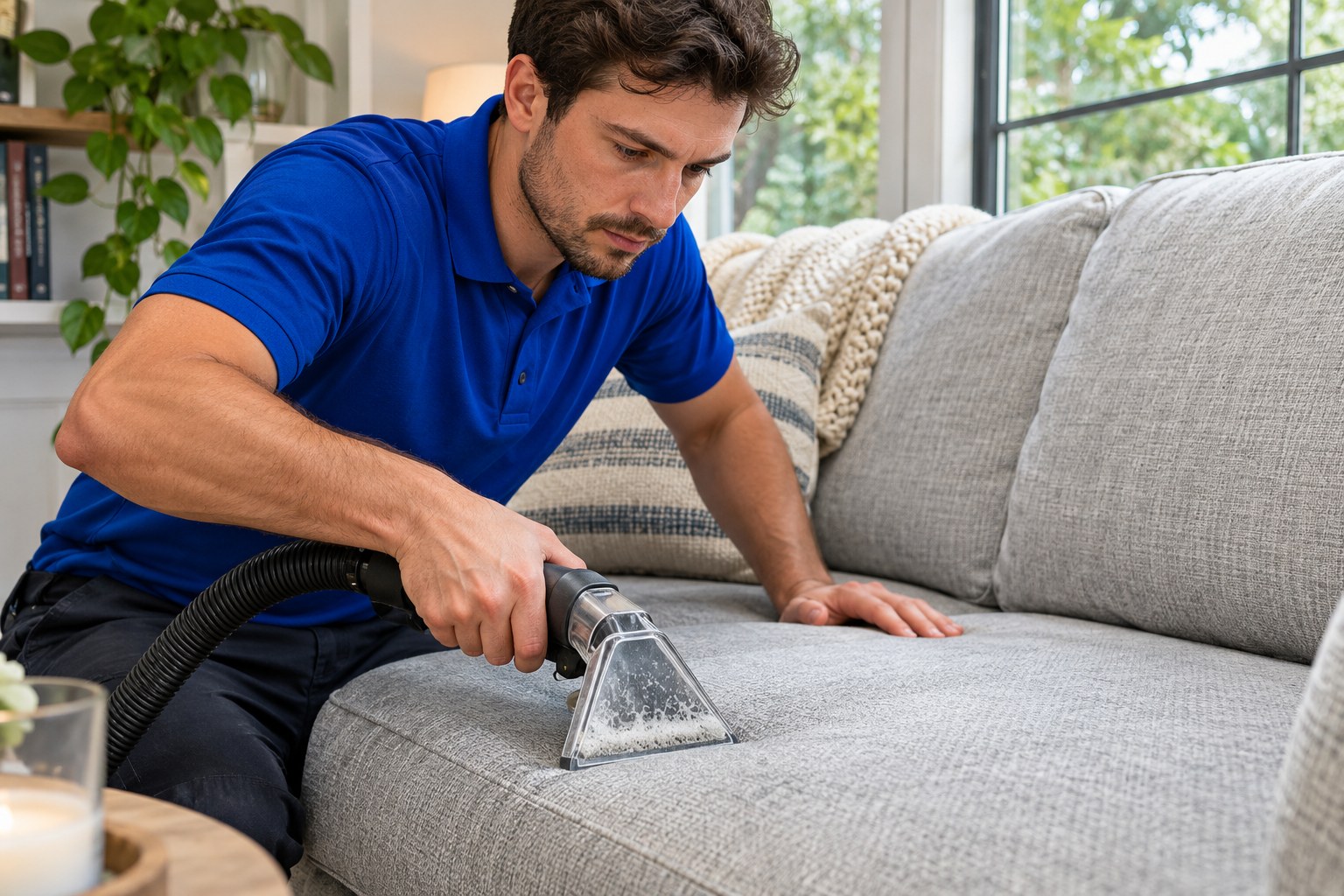
Care that starts
with the details.
Upholstery cleaning is not a smaller version of carpet cleaning. Fabric, fill, skirts, trim and cushions all change what is safe and useful to do. A typical visit starts by reading the care label when one is present, looking at the fabric in good light, and asking how the piece is used: a family sofa, a dining chair, a reading chair, a cushion that has taken a spill.
Care labels, when they are still attached, often use a letter code. A “W” or “WS” recommendation points toward water-based cleaning. An “S” recommendation points toward a solvent approach. An “X” label generally means vacuum only. Labels can be missing or incomplete, so they are a starting point, not the whole decision. A small, hidden colorfastness check is a common next step before any wider cleaning.
The work may include a thorough vacuum of the piece, including seams and under cushions, pretreatment of spots, cleaning of the usable fabric surfaces, and attention to drying so moisture does not linger in the fill. Removable cushions can often be cleaned more evenly than attached ones. Skirts, welting and delicate trims may need a lighter hand or may be better left alone.
Leather, suede, silk, velvet, viscose and some loosely woven fabrics need a more cautious conversation. This page is for everyday upholstered seating in the home. If a piece is an antique, has a known delicate fiber, or has failed a spot test, the honest next step may be a more limited service or a recommendation to seek a specialist.
Tell us about each piece you would like cleaned, the fabric if you know it, and any spots or odors. Photos of labels, arms and cushions help a great deal.
- Sofas and sectionals
- Armchairs and dining chairs
- Fabric and spot assessment
Fabric first, then a careful clean.
Inspect the piece.
Review the fabric, label, colorfastness and construction of each item before choosing a method.
Vacuum thoroughly.
Include seams, crevices and the undersides of cushions, where soil often hides.
Clean what can be cleaned safely.
Use a water-based or solvent approach matched to the fabric, then help the piece dry evenly.
Arms, headrests and seat centers usually carry the most soil and may take more time than the back of a cushion. You will be given simple guidance for use of the piece while it finishes drying. Cushions can take longer than the surface appears to.
The places people sit tell the story.
Upholstery often soils in a pattern you can see once you look for it. The front edge of a seat, the arms, and the place where heads rest become darker or shinier than the rest of the piece. A favorite corner of the sofa looks different from the unused side. Dining chairs show a season of meals even when the table has been wiped.
Spills, pet marks, and odors that linger in a cushion are other reasons to ask for a closer look. A general refresh of a whole piece is also reasonable when you are tired of living with everyday dullness, or when you want furniture and nearby rugs or carpet addressed on the same visit.
Because each piece is different, an estimate request should name the items (for example, one sofa and two dining chairs), the fabric if you know it, and any spots you hope can be improved. No upholstery cleaning can promise that every mark will disappear, especially where dye has shifted or a spill has already set.
Request an upholstery estimate →Good to know.
Will you clean leather or outdoor furniture?
Those materials need a different conversation than everyday indoor fabric. Mention the material in your request so the scope can be discussed honestly before an appointment is set.
What do the letters on the care label mean?
W and WS generally point toward water-based cleaning, S toward solvent, and X toward vacuum only. Labels can be missing or imperfect, so a visual check and a small hidden test still matter.
Can every spot be removed from a sofa?
No. Some spills change the dye or the fiber, and some odors sit deeper in the fill. An assessment of the piece comes before any promise about a particular mark.
How long does upholstery take to dry?
It depends on the fabric, the method, the fill and the airflow in the room. Cushions can take longer than the surface appears to. Ask for guidance for your pieces.
What should I include in my estimate request?
List each piece, approximate size, fabric if known, and any spots or odors. A photo of the care label and of the areas of concern is helpful.
Other ways we can help.
These services often go together. Choose the ones that fit your space.
Spot & odor care
Targeted help for spills and marks after a clear look at what happened.
Explore the service ↗Pet spots & odors
Focused attention for pet accidents that may have reached more than the surface.
Explore the service ↗Area rug cleaning
Care planned around each rug’s fibers, dyes and construction.
Explore the service ↗